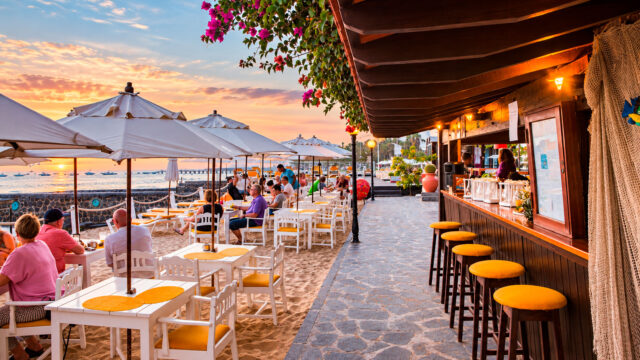
The growth of tourism in Cabo Verde and the challenges of digital visibility for local businesses
The island of Sal continues to establish itself as Cabo Verde’s leading tourist destination. Every year, hundreds of thousands of visitors arrive in the archipelago in search of sunshine, beaches, cuisine, experiences and moments of relaxation.
For hotels, restaurants, shops, transport companies and small service providers, this trend represents a significant opportunity. But there is one issue that warrants attention: is the growth in tourism translating into more customers for all local businesses?
The answer is not necessarily yes.
Attracting visitors to a destination and ensuring those visitors discover a specific establishment are two different matters. In a market increasingly influenced by information available on the internet, a digital presence can play a decisive role in making that connection.
Cabo Verde will have welcomed over 1.2 million visitors by 2025
The official figures help to illustrate the scale of this market.
According to the National Institute of Statistics of Cabo Verde (INE), the country’s hotels welcomed 1,248,052 guests in 2025, a 6 per cent increase on the previous year.
The number of overnight stays also rose, reaching 6,120,204 – an increase of 8.3 per cent compared with 2024.
The island of Sal retained its leading position, accounting for 57.7 per cent of overnight stays in the country’s hotels, followed by Boa Vista with 24.4 per cent.
These indicators demonstrate the importance of tourism to the national economy and confirm the privileged position of the island of Sal.
However, it is important to distinguish between two realities: the number of guests registered at accommodation establishments does not necessarily correspond to the number of unique tourists who visited the country, and the increase in tourist demand does not mean that all establishments benefit equally.
The real challenge for local businesses is not simply to attract more tourists to the island. It is to ensure that these tourists become aware of their products and services.
Tourists begin exploring the destination before they arrive
Imagine a British couple who are organising a week’s holiday in Santa Maria.
Before travelling, they look up photos of the island, check restaurant recommendations, search for tours, compare activities and identify places they’d like to visit.
By the time they arrive at their destination, many of these decisions have already been partly made.
Others come to light during the stay, through simple searches on a mobile phone:
- Where can you eat fresh fish in Santa Maria?
- What restaurants are there near the hotel?
- Where can I hire a bike?
- What are the best excursions on the island of Sal?
- Where can you buy local products and handicrafts?
These enquiries represent concrete business opportunities.
A visitor might be just a few metres away from an excellent restaurant or a small shop selling interesting products, and yet never realise they exist.
Having a good physical location remains important. But being easily found online also counts.
First impressions are no longer made solely at the door of the establishment
For many years, the shop window, the façade, the décor or the location were the main elements that helped a potential customer form a first impression.
Nowadays, that first point of contact can come via a photo on Google Maps, a review from another visitor or a webpage.
Let’s consider two restaurants with similar characteristics.
The website features recent photographs of the dishes, up-to-date information, an easy-to-navigate menu and customer reviews.
The second has an incomplete digital presence, featuring old photographs and little information about what it offers.
Even if the quality of the food is similar, the potential customer has more factors to consider when evaluating the first establishment.
This does not mean that the most visible business is necessarily the best. It means that the information available helps consumers to resolve any doubts before making a decision.
And in a tourist destination, where many customers are unfamiliar with local establishments, instilling confidence from the very first point of contact can make a significant difference.
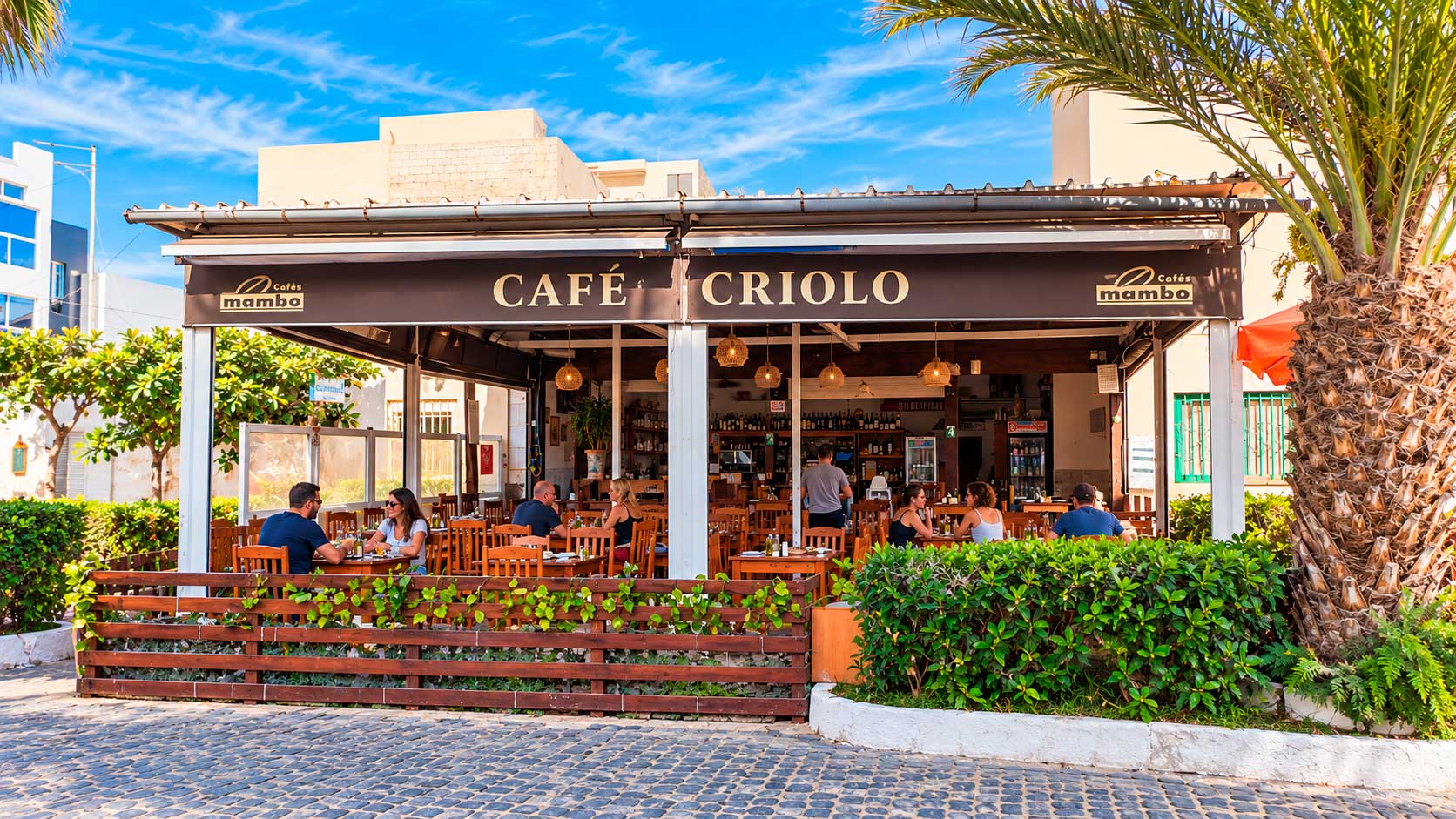
Google Maps: a digital shop window for businesses in Santa Maria
Google Maps is no longer just a tool for finding directions.
For those visiting an unfamiliar destination, it also serves as a platform for discovering restaurants, accommodation, shops and services.
A business listing can include details such as location, opening hours, contact details, photographs, reviews and a link to the website.
According to Google’s official documentation, the ranking of local results depends primarily on three factors: relevance, distance and prominence.
The company recommends keeping details complete and up to date, adding photographs and responding to customer reviews.
For a business in Santa Maria, this could translate into some relatively simple steps:
- Accurate information: please confirm the trading name, location, telephone number and opening hours.
- Real and recent photographs: showcasing the premises, products, team or services on offer.
- Customer reviews: encourage genuine feedback and respond professionally to comments received.
- Clear description: explain what sets the establishment apart and what kind of experience it offers.
- Accessible information: making it easy to get in touch and providing visitors with useful details.
It is important to understand that none of these measures guarantees a top position in search results. However, they do help to provide a more comprehensive and useful digital presence.

An international market demands well-prepared communication
Cabo Verde’s tourism sector is characterised by a strong presence of foreign visitors.
In 2025, non-residents accounted for 95.5 per cent of guest arrivals at hotels.
The United Kingdom stood out as the main source market, followed by Portugal, Germany, France and other European markets.
This diversity presents an opportunity, but also a communication challenge.
A restaurant may have an excellent menu, but it risks missing out on business if visitors cannot understand the dishes or check the prices.
A tour operator may offer interesting experiences, but can raise questions if it does not clearly explain the itineraries, duration or terms of service.
It isn’t necessary to turn every small business into a complex international corporation. Sometimes, simple changes can improve communication:
- Provide essential information in Portuguese and English.
- Present prices clearly.
- Use photographs that accurately represent the products and services.
- Make it easy to get in touch by phone or WhatsApp.
- Explain booking, payment and cancellation terms where applicable.
Good digital communication is no substitute for hospitality. It helps ensure that this hospitality begins even before the customer arrives.
Growth in tourism is also increasing competition
When a destination attracts more visitors, it creates opportunities for new entrepreneurs.
Further restaurants, accommodation providers, tour operators, shops and specialist services may be added.
This development is positive for the local economy, but it also means that consumers now have more options.
In this context, differentiation becomes important.
A family-run restaurant can stand out for its traditional cuisine. A small guesthouse can emphasise its personalised service. An activities company can specialise in experiences for families or small groups.
Every business has its own unique characteristics that deserve to be highlighted.
A digital presence should not be used to present all businesses in the same way. It should help each one showcase what makes it unique.
This is precisely why authentic photographs, well-crafted descriptions and up-to-date information can be more useful than generic advertising messages.
Does having a website still make sense?
Social media and search engines play an important role in business discovery.
However, a website can bring together in a single space information that would otherwise be scattered across different platforms.
For a restaurant, it can display the menu, opening hours, location and booking options.
For accommodation providers, it can explain the features of the rooms, the services available and contact details.
For a tour operator, it can organise activities, display photographs, answer queries and facilitate requests for information.
A website also allows you to build your own visual identity and have greater control over how content is presented.
Of course, not all businesses need a complex website. The decision should depend on the objectives, the resources available and the clients’ actual needs.
The most important thing is not to have as many digital platforms as possible, but to ensure that the channels used provide accurate, consistent and easy-to-find information.
Five questions any business owner on the island of Sal might ask today
Before investing in advertising or contracting new services, it is worth examining your own business’s digital presence from the perspective of a potential customer.
1. Does my business appear when someone searches for its name on Google?
If the answer is ‘no’, there may be an issue with visibility or brand recognition.
2. Do the photographs available accurately reflect what the customer will actually find?
Old, blurry or out-of-date images can give a different impression from reality.
3. Can a foreign tourist understand what we offer?
Providing basic information in English can facilitate communication with a significant portion of the market.
4. Is it easy to find out our opening hours, prices and contact details?
The more difficult it is to find essential information, the greater the likelihood that a visitor will look for an alternative.
5. Are we paying attention to what customers say about us online?
Reviews can highlight positive aspects to be emphasised and opportunities for improvement that are not always apparent in day-to-day management.
These five questions are no substitute for a professional analysis, but they provide a good starting point for identifying problems and setting priorities.
Opportunity does not guarantee growth
Tourism figures show that Cabo Verde continues to attract a significant number of visitors and that the island of Sal plays a central role in this market.
However, the results for each business depend on many factors: quality of service, location, prices, customer service, reputation, seasonality and adaptability.
Digital presence is part of this overall package.
A restaurant does not become excellent simply by appearing on Google. An accommodation provider does not attract guests just because it has a modern website. And a shop does not build a good reputation solely through photographs.
However, when there is genuine quality in the real world, carefully crafted digital communication can help that quality reach a wider audience.
For business owners and entrepreneurs on the island of Sal, this is perhaps one of the most important considerations at a time of growing tourism:
Your next customer might already be on the island, interested in exactly what your business has to offer. The question is whether they’ll be able to find you.
Do you know how your business appears online?
A well-managed digital presence starts with understanding what customers find when they search for your business. Discover NetStudio’s free tools and identify opportunities for improvement.
Sources and references
- Cabo Verde National Institute of Statistics — Guest Traffic 2025
- Google Business Profile — Tips for improving local visibility
Data accessed in October 2026.
read next