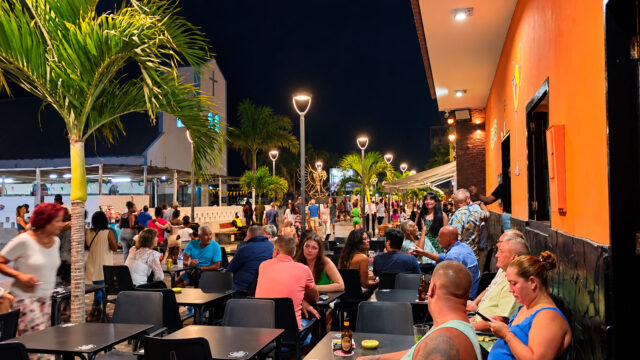
The importance of digital image for restaurants, accommodation providers and businesses in Cabo Verde
Imagine you’re organising your next holiday and come across two restaurants in the same area. Both offer similar dishes, have comparable prices and are relatively close to your accommodation.
The first features bright, well-composed photographs, with the dishes clearly visible and recent images of the venue. The second features only a few old, dark or blurred photographs.
Without having visited any of these establishments in person, which one would spark the most interest?
This brief comparison helps to illustrate an important reality: photographs influence the way a potential customer gets to know and assesses a business before visiting it.
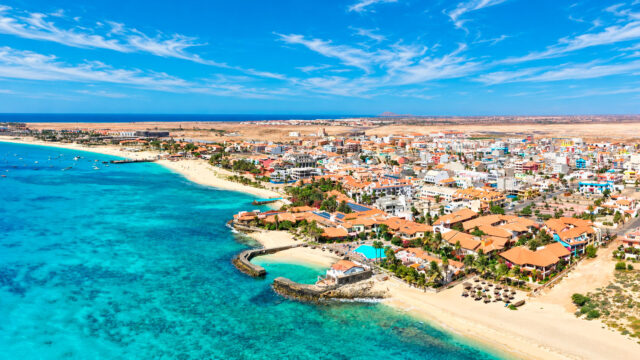
On the island of Sal, where a significant proportion of economic activity is linked to tourism, that first impression can be formed long before the visitor even arrives in Santa Maria.
But you don’t need to run a hotel or restaurant to benefit from a good visual presentation. Shops, beauty salons, tour operators, transport services and small businesses can also harness the power of photography to showcase what they have to offer.
A customer’s first encounter with your business might come via a photograph
When a tourist searches for a restaurant on Google Maps, looks up accommodation online or discovers a shop on social media, they are forming an opinion based on the information available.
The photographs allow visitors to see features that are not always easy to convey through a description alone.
A restaurant can showcase the layout of its outdoor seating area, the presentation of its dishes or its interior décor. An accommodation provider can showcase its rooms, the cleanliness of its facilities and the services on offer.
A tour operator can help visitors understand the kind of experience it offers by showcasing its vehicles, itineraries and the places visited.
The photograph serves as an initial introduction to the establishment.
Of course, an image does not guarantee the quality of the service. However, it can provide useful information to allay doubts and spark interest.
A beautiful photograph is not necessarily a good commercial photograph
There is a difference between producing a visually pleasing image and creating a photograph that helps the client understand a product or service.
An artistic photograph of a dish may be interesting, but it is of little use if it does not allow the viewer to identify what is being served.
Similarly, a close-up image of a room’s décor can convey a pleasant atmosphere without revealing the room’s actual dimensions.
Commercial photographs should strike a balance between aesthetics and information.
Show what the customer will actually find
A good image should accurately represent the venue, product or service.
It is possible to improve the lighting, correct minor technical imperfections and adjust the framing without altering the essential characteristics of the subject being photographed.
The problem arises when the image promises a reality that is different from the actual situation.
Making rooms appear larger than they are, adding facilities that do not exist or displaying products that are not available can create expectations that the establishment will be unable to meet.
The importance of choosing the right framework
It is not always necessary to use professional photographic equipment to achieve good results.
A modern mobile phone, used with attention to lighting, composition and stability, can produce images suitable for many commercial purposes.
Before taking a photograph, it is worth checking the background, seeking a balanced perspective and avoiding unnecessary elements that might distract the viewer.
The aim is not to transform a small establishment into a luxury venue. It is to showcase, in the best possible way, what truly sets it apart.
A good commercial photograph does not need to invent a more beautiful reality. It needs to present reality with clarity, care and authenticity.
Restaurants: the image begins before the first course is served
For a restaurant, photographs can serve different purposes throughout the customer’s experience.
Before your visit, they help you understand the atmosphere, the type of food and the presentation of the establishment.
During the selection process, they can help customers compare different options. After the visit, they also serve as a way to reminisce about and share the experience.
Therefore, a balanced selection of photographs might include:
- Facade and entrance: to make the restaurant easily recognisable.
- Terrace and indoor dining area: to showcase the atmosphere and the layout of the tables.
- Signature dishes: presented accurately to reflect the portions and ingredients served.
- Service details: elements that help convey the establishment’s personality.
- Atmosphere at different times of day: when the experience changes significantly between lunch and dinner.
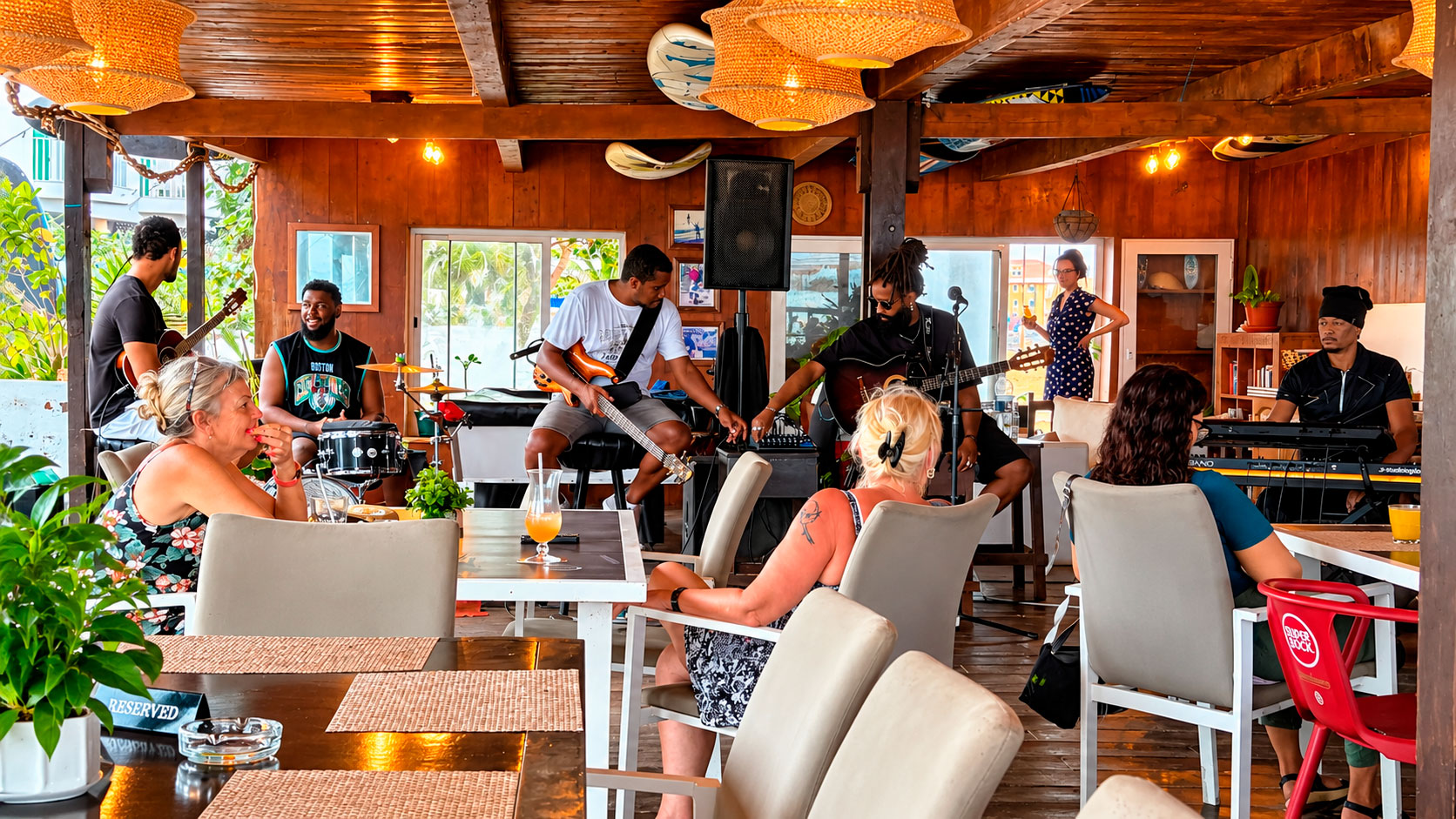
A traditional restaurant in Santa Maria might highlight Cape Verdean cuisine, fresh fish or its proximity to the sea. Another might stand out for its live music, a cosy terrace or its international cuisine.
It is not necessary for everyone to use the same images. Each establishment should showcase the features that make it recognisable.
Accommodation: photography to inform and inspire confidence
When someone books accommodation online, photographs become particularly important because the customer is choosing a place where they may spend several days.
Rooms, bathrooms, communal areas, entrances and outdoor spaces should be presented clearly.
A wide-angle photograph can help to convey the layout of a room, but it should be used with care so as not to create a misleading impression of spaciousness.
It is also important to keep images up to date following renovations or significant changes.
A small guesthouse may not have the facilities of a large resort, but it can highlight other important aspects: cleanliness, comfort, personalised service or proximity to the main points of interest.
Authenticity can be a key differentiating factor.
Visitors do not necessarily need to find luxury. They need to understand what they are booking and feel that the information provided is reliable.
Shops and small businesses also benefit from high-quality images
Commercial photography is not limited to traditional tourism.
A craft shop can showcase locally produced items, details of the materials used and the layout of the shop.
A beauty salon can showcase its premises and examples of work carried out, whilst respecting the privacy and consent of the people photographed.
A bike hire company can showcase the bikes available, safety equipment and the locations where the service is provided.
For many small businesses, a selection of simple, well-organised photographs can help customers understand what they can expect to find at the establishment.
This clarity can also reduce repetitive enquiries about products, services and terms of use.
What does Google recommend regarding business photographs?
Google allows businesses to add photos and videos to their Business Profiles, provided they comply with the platform’s policies.
According to the official Google Business Profile guidelines, images must be in focus, well-lit and accurately represent reality.
Google also recommends avoiding significant changes or the excessive use of filters.
The photographs may show different aspects of the establishment, including the façade, the interior, the products and the services.
Technical quality of the photographs
Among the requirements and recommendations published by Google are:
- Please use JPG or PNG files.
- Please ensure the file size falls within the limits permitted by the platform.
- Use images with sufficient resolution and good definition.
- Avoid blurry or excessively dark photographs.
- Ensure that the images accurately represent the establishment.
For photographs of establishments, Google recommends a standard resolution of 720 by 720 pixels, although it also accepts other dimensions within the established requirements.
It is important to understand that publishing more photographs does not automatically guarantee better rankings in local searches.
The main objective should be to provide useful, up-to-date and representative visual information.
Artificial intelligence and photo editing: where is the limit?
Today’s editing tools make it possible to fix problems that previously required advanced technical knowledge.
It is possible to improve exposure, reduce noise, correct colour balance and partially recover details from photographs of limited quality.
Artificial intelligence also enables more complex operations, such as reconstructing parts of an image, removing objects or modifying elements of the composition.
These features require some care when used to showcase real-world businesses.
It is one thing to improve the lighting on a terrace whilst preserving its authentic appearance. It is quite another to add customers who were not actually there, alter the size of the space or create a décor that does not exist.
In the first case, this is a technical correction. In the second, the photograph may no longer accurately represent the establishment.
For platforms such as Google Maps, where images help people understand what a place is like, authenticity is particularly important.
Technology can enhance the presentation of a photograph, but it should not replace the reality that the customer expects to find when they arrive at the establishment.
Photographs also influence the user experience on a website
A photograph may be of excellent visual quality, yet still hinder the usability of a webpage if the file is too large.
Large images can increase loading times, particularly on slower mobile connections.
For this reason, when preparing photographs for publication, consideration must be given not only to their appearance but also to the website’s performance.
Google Search Central’s recommendations include the use of high-quality images, appropriate formats and descriptive alt text.
The file name should also make sense
A file named IMG_00482.jpg gives no indication of its content.
A filename such as restaurant-terrace-santa-maria.jpg is more descriptive and organised.
This practice makes it easier to manage files and can provide some context to search engines.
What is the purpose of alt text?
Alternative text, usually identified by the HTML ‘alt’ attribute, describes the content of an image.
As well as helping search engines understand the visual context, this is important for accessibility, particularly for people who use screen readers.
For example, a photograph of an outdoor terrace might have the following description:
‘Restaurant terrace in Santa Maria on the island of Sal, with outdoor tables and a view of the street.’
There is no need to repeat keywords artificially. The description should be useful and correspond to the actual content of the photograph.
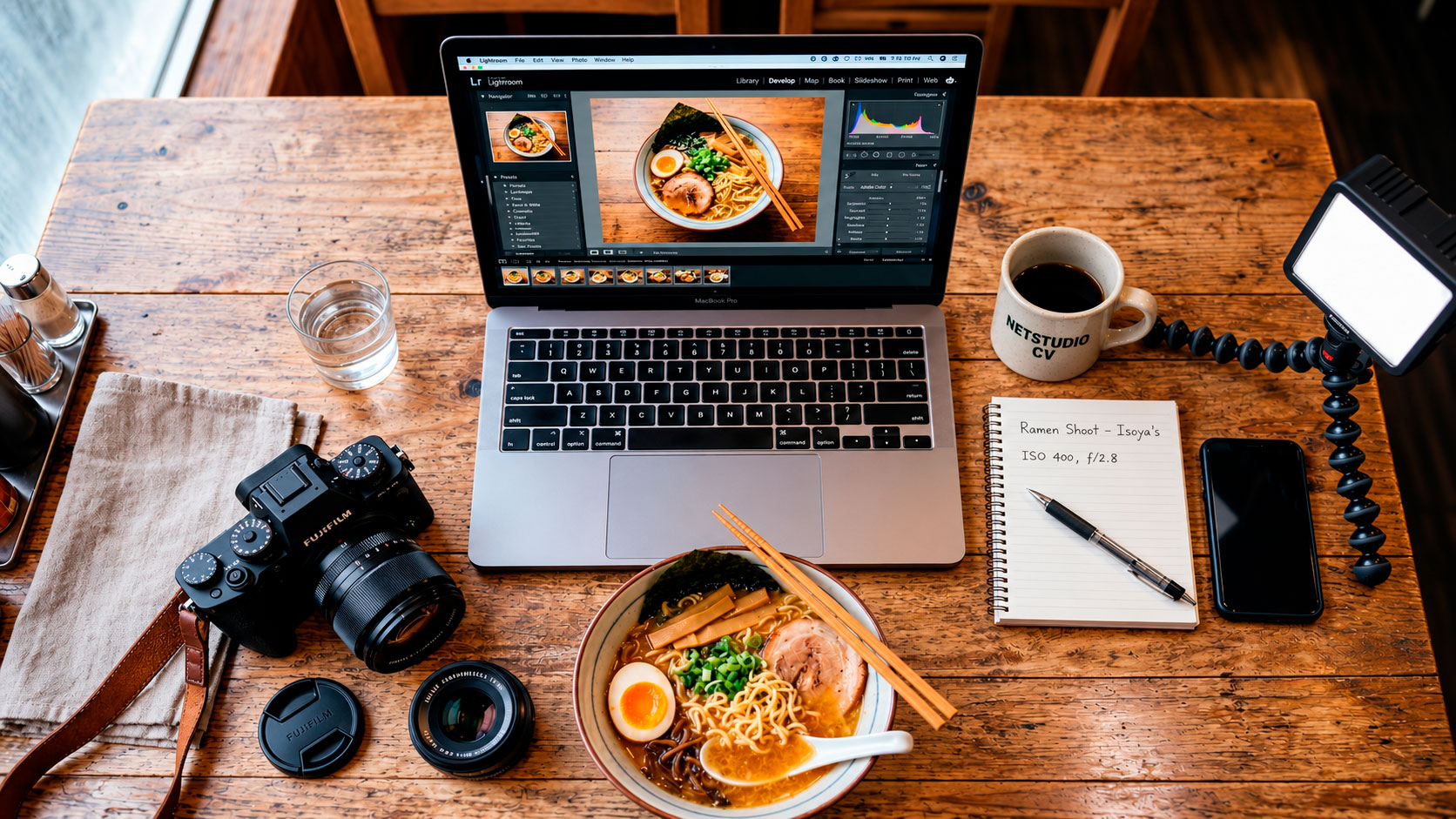
Seven simple ways to improve your business photos
Before investing in new equipment or hiring specialist services, it is worth carrying out a brief review of the images that have already been published.
1. Remove out-of-date photographs
Please identify any images that no longer reflect the current state of the premises or products.
2. Take photographs in good lighting
Whenever possible, make the most of natural light and avoid excessive contrasts between very light and very dark areas.
3. Organise the space before taking photographs
Small details regarding cleanliness, the arrangement of objects and the framing can considerably improve the presentation.
4. Show different perspectives
A single photograph rarely manages to convey all the features of an establishment.
5. Maintain a consistent visual identity
Aim to use similar criteria for lighting, framing and colour treatment.
6. Prepare images for the internet
Reduce file sizes without unnecessarily compromising quality, and use dimensions appropriate to the location where the files will be displayed.
7. Update the gallery regularly
Include new images whenever there are significant changes to the premises, products or services.
These measures can be implemented gradually, without the need to overhaul the entire visual identity all at once.
A good image starts with a good business
Photographs help businesses showcase their products, premises and services. But they cannot replace the quality of what is on offer.
A restaurant still depends on its food and service. Accommodation needs to provide comfort and deliver on its promises. A tour operator must ensure organisation, safety and a satisfactory experience.
Photography works best when there is consistency between the published image and the customer’s actual experience.
For businesses in Cabo Verde, particularly those catering to international visitors, this consistency helps to build a recognisable identity and instil confidence.
There’s no need to appear bigger, more modern or more luxurious than you actually are.
It is more effective to showcase, in high quality, what makes each establishment special.
Because a good photograph can spark a customer’s interest. But it is the actual experience that determines whether that interest turns into a fond memory.
Do your company’s photographs show your business at its best?
A professional digital presence depends on several factors: photographs, up-to-date information, website presentation and visibility in search results. Discover NetStudio’s free tools to start analysing how your business appears online.
Sources and references
- Google Business Profile — Manage your business’s photos and videos
- Google Business Profile — Recommendations for photographs of establishments
- Google Search Central — Best practices for image SEO
References consulted in October 2026.
read next
Tourism on Sal Island: opportunities for local businesses